
Seasonal Workplace Safety: What Changes, and What an Employer Should Do Before It Does

Image for illustration purposes only
Seasonal workplace safety is the review an employer runs before conditions change, checking whether the controls that worked last quarter still hold once temperature, daylight, staffing and workload shift. It is not a weather problem. It is a controls problem that weather exposes.
A loading dock that works well in September becomes slippery and hard to access after the first snowfall. A warehouse that is comfortable in spring is uncomfortably hot by July. The hazards are rarely new. What changes is whether the arrangements that managed them in October still work in January.
This article uses Ontario law as the worked example, because that is where most readers operate and because Ontario’s provisions are unusually specific on surfaces and lighting. Every province and territory has its own occupational health and safety act with equivalent duties. PHASCORP delivers safety consulting and on-site training across Canadian provinces, so if you operate in more than one, the principle holds and the citations change.
How seasonal changes affect workplace health and safety
Seasonal risk moves on four axes at once: temperature, daylight, precipitation and workload. Most employers review one of them, usually snow, and miss the other three. A business that clears its parking lot diligently may still have a loading bay that goes dark at 4:30pm in December and a December headcount that has crossed the threshold for a joint health and safety committee.
Understanding seasonal workplace hazards
A seasonal hazard is a source of potential harm that appears or becomes more serious as conditions change. Ice at a customer entrance is the obvious case. Less obvious is condensation forming on a warehouse floor when warm, humid air meets a cold slab, which produces a slip hazard indoors in the middle of winter, in a building with no snow in it. Each workplace has its own combination, and the combination is what matters rather than any single item on a list.
Why a proactive approach is the only one that works
Waiting for a worker to slip is a poor way to discover that a control has stopped working. Before conditions change, ask supervisors and workers what has become harder to do safely. That question surfaces hazards that no inspection form asks about.
Two duties under the Ontario Occupational Health and Safety Act carry most of the weight here. Clause 25(2)(a) requires an employer to provide information, instruction and supervision to a worker to protect the health or safety of the worker. Clause 25(2)(h) requires an employer to take every precaution reasonable in the circumstances for the protection of a worker. The second is the general duty clause, and it is the provision that applies when no specific regulation covers the hazard. Seasonal conditions are the clearest everyday example of that: the circumstances change, so what counts as a reasonable precaution changes with them.
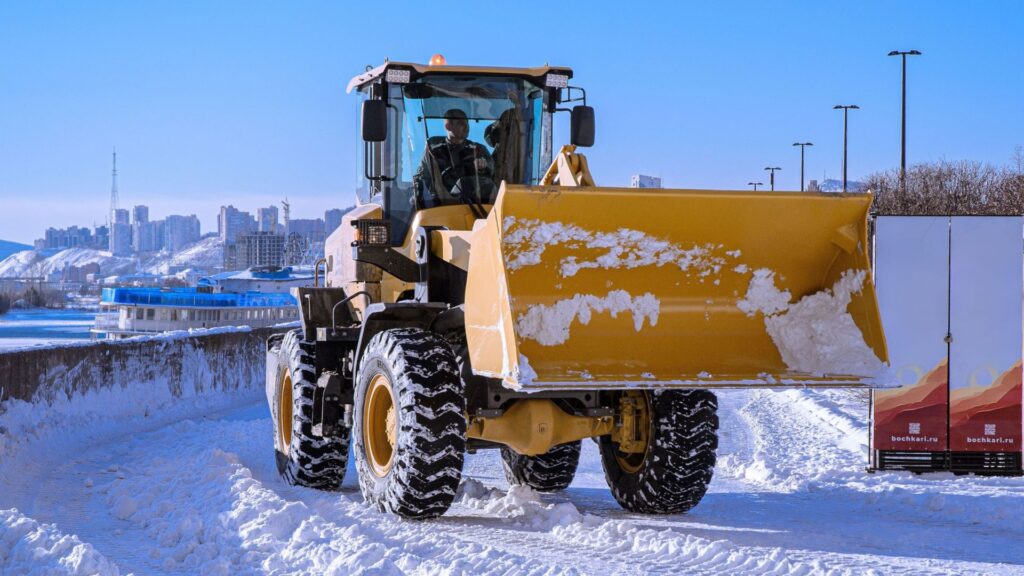
Image for illustration purposes only
Common seasonal workplace hazards employers should know
Winter: slips, trips, falls and cold stress
Ontario is specific about surfaces, and the wording is worth reading in full. Section 11 of Regulation 851, the Industrial Establishments regulation, requires that a floor or other surface used by any worker shall be kept free of obstructions, hazards, and accumulations of refuse, snow or ice, and shall not have any finish or protective material used on it that is likely to make the surface slippery.
Snow and ice are named in the regulation. This is not a general-duty judgment call, it is a prescribed requirement, and it applies to any surface used by a worker, which includes the route between staff parking and the building. A cleared front door does little good if the side entrance used by the early shift is still icy at 6am.
So decide who checks and treats walking surfaces, how quickly conditions are reassessed during snowfall, and where meltwater collects indoors. Keep mats flat, drainage clear and emergency exit routes usable. The second half of section 11 catches a mistake that gets made in good faith every winter: a protective floor coating applied to resist salt damage can itself make a surface slippery, which puts the employer in breach while trying to solve the problem.
For outdoor equipment operators, check whether snowbanks have obstructed sightlines at intersections and pedestrian crossings. A snowbank is a temporary structure that changes traffic visibility, and it is usually nobody’s job to assess it.
Cold exposure is the other half. Ontario has no cold stress regulation, so cold sits under clause 25(2)(h) alongside heat. Wind, wet clothing and time outdoors all compound. Consider warming areas, suitable clothing, shorter task durations, and a clear process for reporting symptoms. Workers handling metal tools or doing fine work need particular attention to hand protection, because dexterity fails before the worker notices. The Canadian Centre for Occupational Health and Safety publishes control measures for cold environments covering clothing, warming arrangements, training and work practices, which is the practical reference to build a procedure from.
Summer: heat, and the regulation that does not exist
Ontario has no heat stress regulation. This surprises most employers, and the employers it does not surprise often draw the wrong conclusion from it.
There is no prescribed temperature at which work must stop, no mandated rest-break schedule, and no statutory threshold to measure against. Heat is governed by clause 25(2)(h), the duty to take every precaution reasonable in the circumstances, and by the clause 25(2)(a) duty to instruct. The Ministry consulted on a standalone heat stress regulation in 2023 and has not made one.
The absence of a number is not an absence of obligation. It is the opposite. A prescribed limit tells an employer exactly how much is enough. A general duty does not, which means the standard is whatever a reasonable employer would have done, assessed after something has gone wrong. That is a harder test to pass, not an easier one.
Change may be coming. Bill 130, the Adapting to a Hotter Ontario Act, 2026 would add a new Part IV.1 to the OHSA covering heat stress. As drafted it would require heat stress training for workers, supervisors and committee members, elimination of hazardous heat through engineering controls where possible, paid cool-down breaks and shade at the employer’s expense, acclimatisation for new and returning workers, a heat stress policy and programme reviewed at least every twelve months, regular heat stress assessments with the results given to the committee or representative, and access to cool drinking water near every work area. The bill passed First Reading on 28 May 2026 and is ordered for Second Reading. It is not law. Even on Royal Assent, the OHSA schedule would commence twelve months later, so nothing in it is a 2027 compliance deadline.
What that means practically: an employer who builds a heat programme now is meeting the general duty today and will be close to compliant if the bill passes. An employer waiting for the rule is exposed under clause 25(2)(h) in the meantime.
Build the programme around exposure, not the thermometer. Humidity, air movement, direct sun, physical effort and protective clothing all change how hot a job actually is, which is why a reading on the wall tells you very little. Heat is a problem outdoors, and also in warehouses, kitchens, mechanical rooms and upper floors without effective cooling. Review where the hottest work happens and when, move strenuous tasks to cooler parts of the day where the operation allows, make drinking water genuinely accessible rather than technically available, and give new and returning workers time to adjust rather than starting them at full pace.
Teach workers to report headaches, dizziness, nausea and unusual fatigue promptly, and make sure supervisors know the response procedure and how to get medical assistance. A worker should not be deciding alone whether their symptoms are serious enough to mention. CCOHS publishes heat stress assessment and control measures that give employers a method for evaluating job conditions.
Autumn: the hazard nobody assesses
Daylight is a control, and it is the only control that removes itself on a schedule.
Section 21 of Regulation 851 requires that where natural lighting is inadequate to ensure the safety of any worker, artificial lighting shall be provided, and shadows and glare shall be reduced to a minimum. The regulation sets no lux value, which means the test is whether the lighting is adequate to ensure safety, judged against the work being done.
Run this check in September rather than November. A yard, loading bay or outdoor walkway that is adequately lit by daylight at 5pm in August is unlit at 5pm in November, and the fixtures that were installed for a summer shift pattern were never asked to do winter work. Glare is the part that gets missed: low winter sun at a dock door or a warehouse window can be worse than darkness, and so can a new LED retrofit aimed badly. Both are section 21 problems.
Seasonal changes in workload
Peak season changes the physical workplace, not just the headcount. Extra inventory narrows aisles, new workers do not yet know pedestrian routes, and extended shifts leave less time for equipment checks. Our warehouse peak season guide works through the hazard assessment, the racking and lift truck provisions and the pre-season checklist in detail.
The one point worth repeating here: the busiest season is not always the coldest or hottest, so a seasonal review that only looks at weather will miss it entirely.

Image for illustration purposes only
How employers can improve seasonal workplace safety
Conduct regular workplace hazard assessments
Start with the task rather than a generic list. Assess unloading deliveries in freezing rain, not “slippery conditions” written on a form, and walk the area with someone who actually does the work. Record the hazard, the possible consequence, the existing precautions, the person responsible and a follow-up date. Give priority to eliminating or reducing the hazard at source before relying on reminders or personal protective equipment, because reminders degrade and equipment gets left in a locker.
Repeat the assessment when work changes materially: a temporary storage area opens, an outdoor project starts, a shift pattern changes. A reported concern or near miss should also trigger one.
Review procedures and inspections
Written procedures have to match what workers can realistically do. If a snow-clearing plan names a contractor but nobody knows who checks the entrances before the morning shift, the plan has a gap that will be found at 6am by whoever arrives first. Assign clear responsibility and a way to escalate when the usual person is unavailable.
Routine inspections should concentrate on conditions that deteriorate fast: walking surfaces, outdoor lighting, drainage, ventilation, access routes and material storage. Check that corrective actions were completed, not that they were recorded. The same concern appearing on three consecutive inspection forms is itself the finding.
Where a workplace has a joint health and safety committee, inspection responsibilities are shared. Subsection 9(2) of the OHSA requires a committee where twenty or more workers are regularly employed, and section 8 requires a health and safety representative where the number of workers regularly exceeds five. The representative is selected by the workers, from among workers who do not exercise managerial functions, which is a detail employers get wrong often enough to be worth checking. The Ontario guide for health and safety committees and representatives sets out how committee inspections work. A seasonal review runs alongside those statutory inspections, not instead of them.
Seasonal hiring interacts with that threshold. A business that sits below twenty workers for most of the year can cross it during a ramp-up, and the committee requirement follows the headcount.
Twenty is not the only trigger, which is the part most employers miss. Subsection 9(2) also compels a committee where an order under section 33 is in effect in respect of a designated substance, or where a regulation concerning designated substances applies. A nine-person workplace handling a designated substance needs a committee regardless of headcount.
Where a committee is required, subsection 9(12) provides that, unless otherwise prescribed, at least one member representing the constructor or employer and at least one representing workers must be certified. Certification takes two courses, and Part 2 must be completed within twelve months of Part 1, so an employer who notices in December has already lost the window to prepare. PHASCORP delivers CPO-approved JHSC certification for Parts 1 and 2 and the Refresher.
Provide appropriate employee training
Training works when it addresses the actual job. Before winter, show staff which walkways are treated and how to report ice. Before summer, cover the signs of heat illness and where to cool down. When seasonal staff arrive, cover traffic routes, equipment restrictions and emergency contacts before they start work rather than at the end of the first week.
For seasonal and temporary workers there is a specific requirement, and it is the one most often missed in a hiring rush. O. Reg. 297/13 requires basic occupational health and safety awareness training for every worker and every supervisor. It applies regardless of employment status, so seasonal, temporary and agency workers are covered on the same terms as permanent staff, and there is no probationary period during which it does not apply. A worker who previously completed an awareness training program can be exempted under subsection 1(2), but only where the worker provides proof of completion and the current employer verifies that the previous training meets the seven topics prescribed in subsection 1(3). The regulation does not use the word equivalent. Verification against the prescribed content is the test, and a certificate title is not verification. Section 4 requires the employer to maintain a record of the training it has provided.
Awareness training is the floor, not the ceiling. It does not cover site-specific hazards, equipment or emergency procedures, so a site orientation sits on top of it. Check understanding by demonstration rather than by signature, and refresh instructions when procedures change.
Workplace safety audits and ongoing monitoring
A workplace safety audit examines whether a safety programme is working as intended, which is broader than inspecting physical conditions. It asks whether identified hazards have owners, whether training records match assigned tasks, and whether reported problems stayed closed.
For seasonal risk, compare the written plan against the actual workplace. Does the heat procedure describe a cool rest area accessible on every shift, including nights? Are winter entrance checks recorded when the weather turns overnight? Do workers know who to contact when the usual supervisor is away? Use the findings to make changes, then check whether the changes worked. Set the audit interval from risk level and operational change rather than the calendar, and bring it forward when something suggests a control has stopped holding.

Image for illustration purposes only
When to bring in occupational health and safety consulting
Outside support earns its place at one of three moments: before opening a new area or site, after the same concern has been reported more than twice, or while revising a programme that has to work across several locations. Managers disagreeing about the right control is a fourth.
Consulting can organise hazard assessments, examine procedures, review audit findings and identify training needs. A useful consultant explains the reasoning behind each recommendation and helps assign realistic actions, because a report nobody uses is an expense rather than a control. The employer remains responsible for its legal duties throughout. Outside advice supports that responsibility, it does not transfer it.
PHASCORP provides health and safety consulting and on-site safety support across Canadian provinces, including multi-site programme reviews for employers operating in more than one jurisdiction. Our consultants work on site, at your workplace, with your equipment and your people.
Make seasonal safety part of ordinary planning
Seasonal safety is easier to manage when it stops being a separate project. Review the next season’s tasks, listen to the people doing them, assign corrective actions, and check that the changes held. You do not need to rebuild the programme every few months. You do need to notice when conditions no longer match the assumptions it was built on.
Get a quote for a seasonal review of your workplace controls. Book a call with PHASCORP to discuss hazard assessments, safety audits and on-site support across your sites.
Frequently asked questions
What is seasonal workplace safety?
Seasonal workplace safety is the practice of identifying and controlling hazards that change with temperature, daylight, precipitation, staffing and workload. It covers winter ice and cold, summer heat, reduced autumn daylight, and the physical changes that come with a seasonal increase in volume.
Does Ontario have a heat stress regulation?
No. Ontario has no heat-specific regulation and no prescribed temperature at which work must stop. Heat is governed by clause 25(2)(h) of the OHSA, the duty to take every precaution reasonable in the circumstances, together with the clause 25(2)(a) duty to provide information, instruction and supervision. Bill 130 would add a heat stress part to the Act, but it has only passed First Reading and is not law.
Is an employer required to clear snow and ice inside and outside the building?
Yes, for any surface a worker uses. Section 11 of Regulation 851 requires that a floor or other surface used by any worker be kept free of obstructions, hazards and accumulations of refuse, snow or ice. It also prohibits any finish or protective material likely to make the surface slippery, which catches coatings applied to resist salt damage.
What are the most common seasonal workplace hazards?
Slippery surfaces, cold exposure, heat exposure, reduced visibility from shorter daylight, and the congestion that comes with higher volume. Which of them matters most depends on the tasks and the building, not on the season alone.
Does an employer have to light outdoor work areas in winter?
Where natural light is inadequate to ensure a worker’s safety, yes. Section 21 of Regulation 851 requires artificial lighting in that case, and requires that shadows and glare be reduced to a minimum. The regulation sets no lux value, so adequacy is judged against the work being performed.
Do seasonal and temporary workers need safety training?
Yes, on the same terms as permanent staff. O. Reg. 297/13 requires basic occupational health and safety awareness training for every worker and supervisor regardless of employment status, with no probationary grace period. A worker who previously completed a program can be exempted under subsection 1(2), but only on proof of completion plus the employer’s own verification that it meets the seven prescribed topics.
Can seasonal hiring trigger a joint health and safety committee requirement?
Yes. Subsection 9(2) of the OHSA requires a committee where twenty or more workers are regularly employed, and section 8 requires a health and safety representative where the number of workers regularly exceeds five. A business below twenty for most of the year can cross the threshold during a ramp-up. Headcount is not the only trigger: a section 33 designated-substance order, or an applicable designated-substances regulation, compels a committee at any size. Certification requires two courses, and Part 2 must be completed within twelve months of Part 1.
How often should a business run a seasonal safety review?
Before each material change in conditions, which for most workplaces means twice a year at minimum and four times where outdoor work is significant. Bring the review forward when a near miss, a repeated concern or an operational change suggests an existing control no longer holds.