
Workplace Incident Investigation
An investigation conducted well establishes why an incident occurred and what must change. An investigation conducted poorly produces a document identifying a worker as the cause and leaving the condition that produced the incident entirely intact.
PHASCORP conducts independent workplace incident and accident investigations across Ontario, and prepares organisations to conduct their own competently.
If a critical injury has occurred, telephone (647) 564-6824.
The first hours
Where a critical injury or fatality occurs, the employer’s immediate obligations are defined and time-bound. The Ministry must be notified immediately by telephone, followed by a written report within the period prescribed by the Occupational Health and Safety Act. The joint health and safety committee or the health and safety representative must also be notified.
The scene must not be disturbed. Subject to the exceptions set out in the Act, which permit interference in order to save a life, relieve suffering, maintain an essential public utility or prevent unnecessary damage, the wreckage, equipment and surroundings must be left as they were until an inspector permits otherwise.
Critical injury is defined in regulation and is broader than employers generally assume. Where there is any doubt about whether an injury meets the definition, treat it as though it does and seek advice immediately, because the consequences of failing to report substantially exceed those of reporting unnecessarily.

Root cause rather than immediate cause
Most internal investigations stop at the immediate cause, which is usually an action taken by a worker in the final seconds before the incident. This is comfortable; it is quick, and it is almost never the finding that prevents recurrence.
A competent investigation continues past that point to the conditions that made the action possible or likely: the state of the equipment, the adequacy of guarding, the design of the task, the supervision in place, the training received and whether it addressed this circumstance, the pressure of the production schedule, and whether the same condition exists elsewhere in
the operation.
We conduct investigations to that standard and report what we find, including where the finding concerns a management decision rather than a worker’s action.
Independence
Internal investigations most often fail on the investigator rather than on the process. An investigator who supervises the worker involved, who signed off the procedure in question, or who authorised the equipment purchase is not positioned to reach an unwelcome conclusion, however capable and well-intentioned they may be.
An external investigator has no such exposure. Where the circumstances are serious, where the finding may implicate management decisions, or where the matter may later be examined by an inspector, an insurer or a court, independence is not a formality.
We also conduct third-party workplace harassment and violence investigations, where the same considerations apply with greater force.
Building internal capability
Not every incident warrants an external investigator, and it would be uneconomical if it did. We train internal investigators in interviewing, evidence preservation, sequence reconstruction, root cause methodology, corrective action design and report writing, and we develop the investigation procedure and forms that support them.
Organisations that investigate near misses competently generally investigate far fewer serious incidents, because the near miss and the injury usually share a cause and differ only in outcome.
After the investigation
A finding without a corrective action is an admission. We work through corrective action design, assignment and verification, and where the condition identified exists at other sites or on other equipment, we extend the action accordingly.
Where the incident has generated a Ministry order, the investigation and the compliance response should be developed together rather than separately.
Cost
Quoted per investigation, according to complexity, the number of people to be interviewed, whether specialist technical assessment of equipment is required, and whether the matter is likely to be examined externally.
Request an investigation: (647) 564-6824 or info@phascorp.com
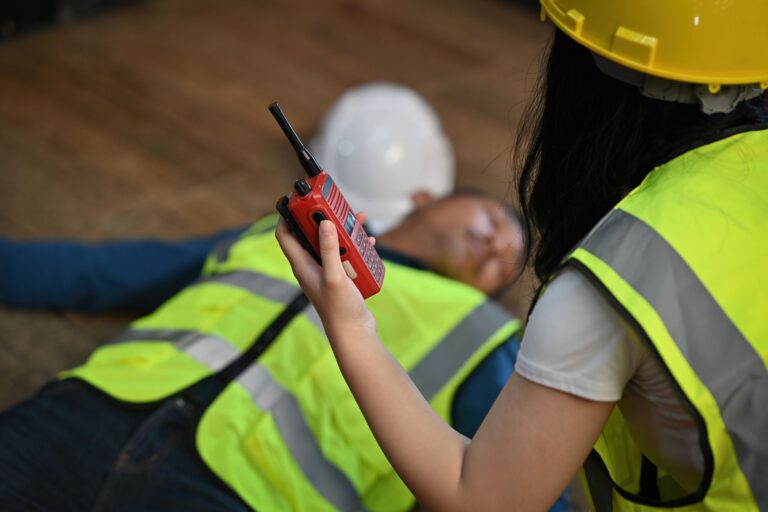
Securing and documenting the scene, interviewing those involved and any witnesses, reconstructing the sequence of events, examining equipment and conditions, identifying the root cause rather than only the immediate cause, and recommending corrective action to prevent recurrence.
Notify the Ministry immediately by telephone and follow with a written report within the prescribed period, notify the joint health and safety committee or health and safety representative, and preserve the scene until an inspector permits it to be disturbed, subject to the exceptions permitted by the Act.
Not without permission, except in the circumstances the Act allows: to save a life, relieve suffering, maintain an essential public utility or service, or prevent unnecessary damage to equipment or other property.
The immediate cause is usually the action or condition present at the moment of the incident. The root cause is the underlying condition that made that action or condition possible, such as equipment state, task design, supervision, training adequacy, or production pressure. Corrective action addressed only to the immediate cause rarely prevents recurrence.
Internal investigation is appropriate for most incidents where the investigator is competent and sufficiently independent of the circumstances. External investigation is appropriate where the matter is serious, where the finding may concern management decisions, or where it is likely to be examined by an inspector, an insurer or a court.
An investigator may be internal or external but must be objective and unbiased, competent to investigate, and free of any conflict of interest with either party. Internal investigations most commonly fail on the investigator’s proximity to the people involved rather than on the process followed.
Yes. We provide investigator training covering interviewing, evidence preservation, sequence reconstruction, root cause methodology, corrective action and report writing, together with the investigation procedure and forms.
Yes. A near miss and a serious injury frequently share the same cause and differ only in outcome. Organisations that investigate near misses competently tend to experience fewer serious incidents.