

Peak season changes a warehouse. More orders come in, more product moves through the building, and more people are on the floor to keep up with it. None of that is a problem on its own. What causes trouble is when the pace picks up faster than the safety program does.
This article walks through what tends to shift when volume climbs, the hazards worth a second look before it happens, and the practical steps that keep a busy warehouse a safe one.
Why Warehouse Safety Matters During Peak Season
Increased Order Volumes and Material Movement
More orders mean more product coming in, more product going out, and more handling in between. Pallets get staged in aisles that are normally kept clear. Overflow inventory ends up in spots that were not planned for storage. None of that is unusual during a busy stretch, but it is exactly the kind of change that creates new trip hazards and blocks sightlines without anyone deciding to put them there.
Increased Forklift and Mobile Equipment Activity
Higher volume usually means forklifts and pallet jacks running more often and covering more ground. That raises the number of times equipment and pedestrians cross paths in a shift. Aisles that feel wide enough in a slower month can start to feel tight once traffic doubles.
Temporary and Seasonal Workers
Peak season is often when a warehouse brings in temporary or seasonal staff to cover the added volume. These workers may not know the traffic routes, where the pedestrian walkways are, how a specific piece of equipment behaves, or what the safe work procedures are for a task they have not done before. That gap in familiarity is one of the more common contributors to incidents during busy periods, not because seasonal workers are careless, but because they are new to the environment.
It is worth being clear about the legal position here, because it is the requirement employers most often miss during a hiring push. Ontario Regulation 297/13 requires an employer to ensure that every worker completes a basic occupational health and safety awareness training program as soon as practicable, and that every supervisor completes a supervisor program. The regulation applies to all workers regardless of employment status, which includes temporary, seasonal and casual staff. There is no probationary grace period and no small-employer exemption. Section 4 of that regulation also requires the employer to maintain a record of the training completed.
A further point worth checking before you hire. Section 9 of the Occupational Health and Safety Act requires a Joint Health and Safety Committee where twenty or more workers are regularly employed, with at least two certified members, one representing workers and one representing management. A warehouse that sits below twenty for most of the year can cross that threshold during a seasonal ramp-up, and certification takes two courses and cannot be arranged in a week.
Faster Work Pace and Changing Workplace Conditions
When the priority is getting orders out the door, it is easy for workers to take shortcuts that feel harmless in the moment: skipping a pre-shift equipment check, reaching instead of using a step stool, walking through a blocked aisle instead of going around. Layouts also shift during peak season as staging areas expand and storage gets reorganized on short notice. A workplace that was safe in October can look different in November.
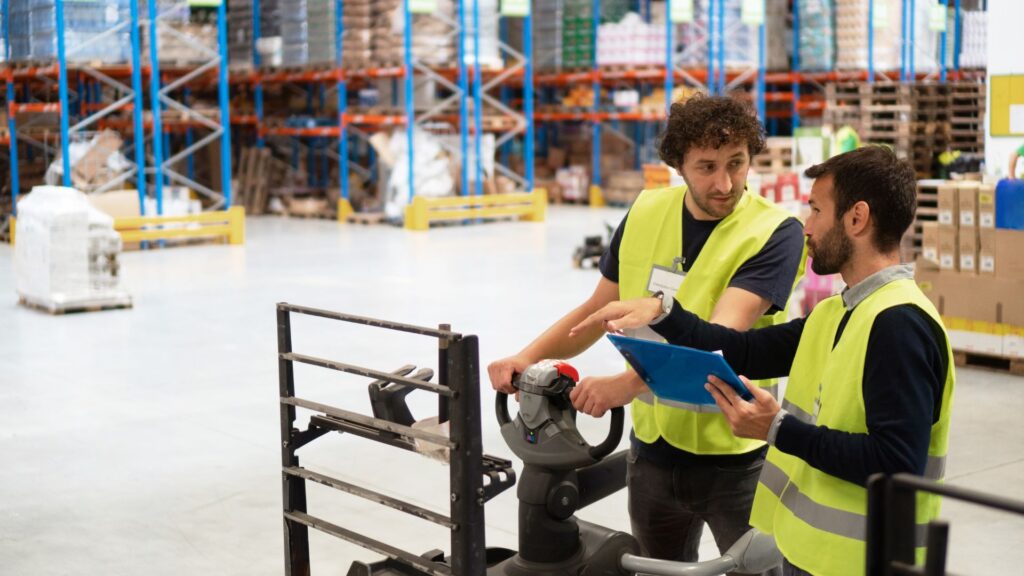
Common Warehouse Safety Hazards to Review Before Peak Season
Material Handling Hazards
Manual material handling is one of the most common sources of warehouse injury, and peak season adds volume and speed to a task that already carries risk. Watch for workers lifting loads that are heavier or more awkward than usual, repeating the same lifting motion for long stretches, or handling product without the equipment that would normally make the job easier.
Clause 45(a) of Regulation 851 requires that material required to be lifted, carried or moved be handled in such a way, and with such precautions and safeguards, as will ensure the work does not endanger any worker. In practice that means reviewing how materials are lifted, carried and set down, and confirming that mechanical aids such as hand trucks and lift tables are available and actually being used.
Forklifts and Mobile Equipment
More forklift trips through the same aisles means more chances for a forklift and a pedestrian to be in the same space at the same time. Forklift safety becomes more challenging as congestion builds at intersections, near staging areas, and around loading doors where equipment and foot traffic naturally converge.
Clause 51(2)(a) of Regulation 851 requires that a lifting device be operated by a competent person, and competency is defined in section 1(1) of the Act as knowledge, training and experience, familiarity with the applicable regulations, and knowledge of the actual or potential dangers in that workplace. The third limb is the one peak season puts pressure on. An operator who is competent on your floor in a quiet month may be working in a materially different environment once aisles narrow and traffic doubles, and an operator brought in temporarily may be competent on the machine and unfamiliar with your site.
Check that visibility at blind corners is still adequate once inventory levels change, that speed limits are being followed, and that operators are completing pre-shift inspections even when the pressure is on to keep moving.
Racking and Storage Hazards
Storage systems take more strain during peak season simply because more product is moving through them. Loads can be placed unevenly, racking can get bumped by mobile equipment more often, and overflow product sometimes ends up stacked in ways it was not designed for.
The governing provision is clause 45(b) of Regulation 851, which requires that material be transported, placed or stored so that it will not tip, collapse or fall, and so that it can be removed without endangering any worker. Clause 45(c) adds that material removed from a storage area, pile or rack must be removed in a manner that does not endanger a worker. Section 46 requires that machinery, equipment or material that may tip or fall be secured against doing so.
There is also a Pre-Start Health and Safety Review requirement that catches warehouses out during peak season, and it is worth understanding before you change anything. Item 3 in the table to section 7 of Regulation 851 requires a PSR where material, articles or things are placed or stored on a rack or stacking structure. Subsection 7(7) provides an exemption where the rack or stacking structure is designed and tested for use in accordance with current applicable standards, and most suppliers provide that documentation with a racking system.
Two peak-season decisions can put you back into PSR territory. The Ministry’s own guideline notes that modifications which may trigger a review include changing the kind of lift truck used to load materials onto the rack, and the type or weight of the loads stored deviating from the original design parameters. Exceeding the manufacturer’s stated load limits also triggers a review. A warehouse that brings in a different class of forklift for peak season, or stores heavier or differently shaped product to cope with volume, may have changed the conditions the racking was reviewed against.
Look at whether racking is loaded within its rated capacity, whether damaged uprights or beams have been reported, and whether overflow storage is creating new hazards in aisles or near exits. Section 72 also applies where a structure is damaged to the extent that a collapse is likely and could injure a worker.
Loading and Receiving Areas
Loading docks see more truck traffic during peak season, which means more staging, more forklift movement near dock edges, and more opportunities for a trailer to be worked on before it is properly secured. Review dock lock and wheel chock procedures, make sure dock plates are rated for the equipment crossing them, and confirm that workers know not to step off an unguarded dock edge.
Ladders and Access to Stored Materials
When storage areas fill up faster than usual, workers sometimes reach for whatever is nearby instead of the right piece of equipment to access product stored above reach. Review whether the correct ladders or order-picking equipment are actually accessible where they are needed, not just available somewhere in the building, and whether workers are using them instead of climbing racking or standing on pallets.
Where an order picker is used, the operator rises with the platform and the fall protection, platform gate and anchor requirements that go with that machine apply, which is a different competency from a counterbalance truck.
Ergonomic and Manual Handling Risks
Repetitive tasks add up faster when volume is high and shifts run longer. Watch for workers doing the same lift, twist or reach hundreds of times in a shift, workstations that force awkward postures, and packing or picking stations that were not set up with a faster pace in mind. Small adjustments to workstation height or task rotation can meaningfully reduce strain over a peak season stretch.
Slips, Trips and Obstructed Work Areas
Housekeeping tends to slip when everyone is focused on throughput. Stretch wrap, packaging debris, and pallets left in walkways are common during busy periods, and they are also common causes of slips and trips. Keep an eye on whether cleanup is keeping pace with the volume moving through the building, particularly in high-traffic zones like packing stations and dock areas.
How to Conduct a Warehouse Hazard Assessment Before Peak Season
Identify Hazards and High-Risk Activities
Walk the floor with peak-season conditions in mind, not the conditions of a quieter month. Look specifically at tasks and areas where volume, traffic, or workforce changes will be most noticeable: forklift routes, staging areas, packing stations, and anywhere temporary workers will be assigned.
Assess the Level of Risk
For each hazard identified, consider how likely it is to cause harm once activity increases and how serious that harm could be. A minor housekeeping issue in a low-traffic corner carries a different level of risk than a blocked pedestrian route next to an active forklift aisle.
Identify Existing Safety Controls
Note what is already in place for each hazard, whether that is physical barriers, signage, safe work procedures, or training. This tells you what is working and what was designed for a lower level of activity than what is coming.
Determine Where Additional Controls Are Needed
Compare the existing controls against what peak-season conditions will actually look like. Where the gap is widest, that is where to focus first, whether that means adding a barrier, adjusting a traffic route, or reinforcing a procedure through training.
Warehouse Safety Controls to Review Before Peak Season
Safe Work Practices
Review the written procedures for the tasks that will see the most activity during peak season, and check that they still reflect how the work is actually done. A procedure that has not been looked at since last year may not account for a new layout or a new piece of equipment.
Forklift and Pedestrian Traffic Controls
Confirm that pedestrian walkways are clearly marked and still make sense given any layout changes. Review whether mirrors, barriers, or speed limits at intersections are sufficient for the traffic level you are expecting, and reinforce the rule that pedestrians and forklifts do not share the same path without a clear line of sight.
Material Handling Controls
Make sure mechanical aids are positioned where they will actually get used, not stored somewhere out of the way. Review team-lift procedures for heavier or awkward loads, and confirm that workers know when a task calls for equipment instead of a manual lift.
Racking and Storage Controls
Check that load capacity signage is visible and current, and that workers know not to exceed it even when storage space is tight. Confirm there is a process for reporting damaged racking and that damaged sections get flagged and repaired rather than left in use. Where you are adding a rack, changing the forklift class used to load it, or storing a different type or weight of product, confirm whether a Pre-Start Health and Safety Review applies before the change goes in.
Loading and Receiving Controls
Review dock safety procedures, including trailer securement, wheel chocking, and dock plate use, especially if receiving volume or the number of trailers on site at once is going up. Confirm workers know the procedure for a trailer that has not been properly secured before anyone enters it.
PPE Requirements
Confirm that the PPE required for each task is still appropriate given any changes in equipment, volume, or layout, and that supplies are stocked to handle a larger or temporary workforce. New and seasonal workers need to know what is required for their specific tasks, not just a general reminder to wear PPE.
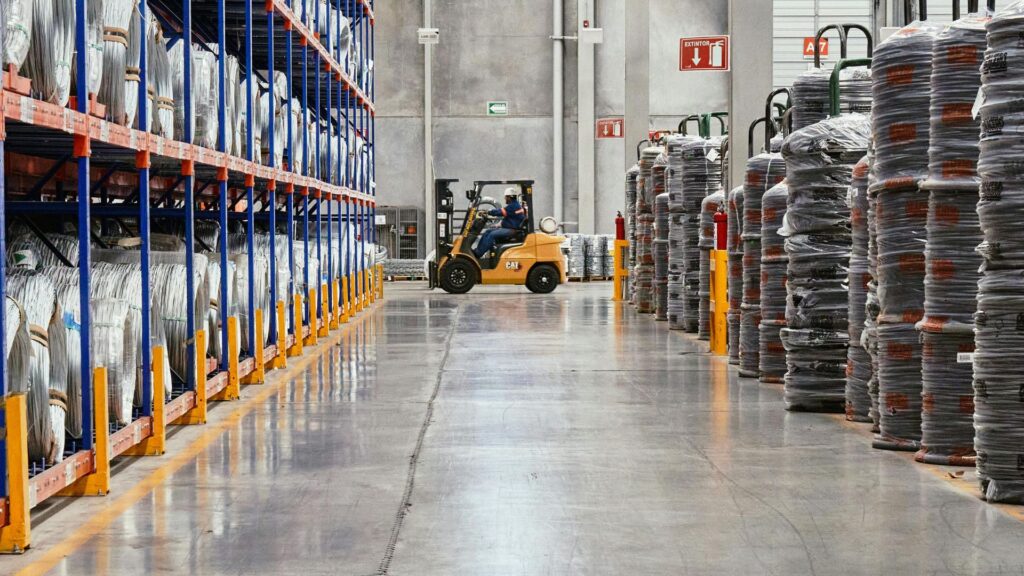
Equipment and Workplace Inspections
Forklift and Mobile Equipment Inspections
Pre-shift inspections matter more, not less, when equipment is running longer hours. Confirm that operators are actually completing them and that any defects identified get reported and addressed before the equipment goes back into service. Pre-use inspection at the start of each shift is recognised practice under CSA B335:25, the current Canadian lift truck safety standard, rather than a requirement written into Regulation 851, which is why employers who go looking for it in the regulation cannot find it.
Racking Inspections
Racking should be inspected for damage, misalignment, and overloading, with particular attention to areas where forklift traffic is heaviest. Peak season is a reasonable time to increase the frequency of visual checks, even outside of any formal inspection schedule already in place. Note that a Pre-Start Health and Safety Review does not require components to be inspected for damage; that duty sits with the employer on an ongoing basis.
Lifting Equipment Inspections
Hand trucks, pallet jacks, hoists, and other lifting aids should be checked for wear and function before peak season starts, since a piece of equipment that is out of service adds pressure to skip it and lift manually instead.
Floors, Walkways and Work Areas
Review floor conditions, walkway markings, and general housekeeping standards across the building, with a focus on the areas that will see the most added traffic. A quick pre-season walkthrough often turns up small issues that are easy to fix before they become a pattern.
Preparing Workers for Peak Season
Warehouse Safety Training
Training should reflect the tasks and conditions workers will actually face during peak season, not a generic overview. That includes hazard recognition, safe work procedures for the busiest tasks, and a clear understanding of what to do if something changes on the floor.
Forklift and Equipment Training
Operators should be trained and competent on the specific equipment they will be using, including any equipment brought in temporarily to handle added volume. Competency attaches to the class of truck, so an operator certified on a counterbalance forklift has not been evaluated on a reach truck or an order picker. A refresher before peak season starts is worth considering even for experienced operators, particularly around pedestrian awareness in congested areas.
Material Handling and Ergonomics Training
Workers doing repetitive lifting or packing tasks benefit from training on proper lifting technique and when to use mechanical aids instead of lifting manually. This matters most for workers new to the role, but it is also a useful refresher for anyone whose task volume is about to increase.
Training Temporary and New Workers
Temporary and seasonal workers need two distinct things, and employers frequently provide one and assume it covers both.
The first is the awareness training required by O. Reg. 297/13, covering worker rights and duties, the roles of the committee or representative, WHMIS requirements and occupational illness. A worker who completed that programme with a previous employer does not have to repeat it, provided they supply proof of completion and the new employer verifies that the content matches what the regulation requires. That verification is the employer’s responsibility and is the step most often skipped.
The second is site-specific orientation: your traffic routes, your emergency exits, the equipment they will use, and the safe work practices for their assigned tasks. Awareness training is generic by design and says nothing about your building. Assuming general warehouse experience covers this gap is one of the more common mistakes employers make during peak season hiring.
Communicating Workplace Hazards and Safe Work Practices
Toolbox talks, shift briefings, and posted reminders are useful ways to keep hazards and expectations front of mind once activity picks up. A short reminder at the start of a shift about a specific hazard, like a temporary staging area or a new traffic pattern, is often more effective than a policy posted on a wall months earlier.
Managing Warehouse Safety During Peak Season
Monitor Changing Hazards
Conditions on a busy warehouse floor can shift day to day as inventory levels, staffing, and layout adjust to demand. Build in a way to catch these changes early, whether that is a daily walkthrough or supervisors watching for new pinch points and blocked routes as they set up.
Maintain Housekeeping and Clear Walkways
Housekeeping needs the same attention during peak season that it gets the rest of the year, even though there is less time for it. Assign responsibility for keeping walkways, aisles, and work areas clear rather than treating it as something that happens whenever someone gets to it.
Manage Increased Traffic and Congestion
Watch for pinch points that develop as staging areas expand or as more equipment is added to cover volume. Adjusting a traffic pattern or moving a staging area a few feet can resolve a congestion issue before it leads to a near miss.
Monitor Workload and Ergonomic Risks
Longer shifts and repetitive tasks add up over the course of peak season. Rotating workers through different tasks where possible, and watching for signs of fatigue, helps manage the ergonomic risk that builds over weeks of sustained volume.
Review Safety Procedures With Supervisors and Workers
Check in regularly with supervisors and workers about what is actually happening on the floor. They are often the first to notice a procedure that is not working under peak-season conditions, and that feedback is useful for adjusting controls before an incident forces the issue.
Incident Investigations and Corrective Actions
What to Do After an Incident or Near Miss
Respond to the immediate situation first, then document what happened while details are fresh. Near misses deserve the same attention as incidents that result in injury, since they often point to the same hazard before it causes harm.
Be aware that a critical injury or a fatality carries immediate notification and scene-preservation obligations under the Act, and that those duties apply whether or not the worker involved is a permanent employee. If you are not certain what your obligations are, establish that before peak season rather than during an incident.
Identify the Root Cause
Look past the immediate action that led to the incident and consider what allowed it to happen: a procedure that was not followed, a hazard that was not controlled, or a condition that changed without anyone updating the corresponding safe work practice.
Update Controls and Safe Work Practices
Use what the investigation turns up to adjust the relevant control, procedure, or training. An investigation that does not lead to a change in the workplace has not accomplished much beyond documentation.
Emergency Procedures for Busy Warehouse Operations
Emergency Routes and Exits
Confirm that emergency exits and evacuation routes are still clear once peak-season staging and inventory changes are in place. A route that was unobstructed in a quieter month can end up partially blocked once storage areas expand.
Communication and Emergency Response
Review how emergencies get communicated on the floor, especially with a larger or temporary workforce that may not be familiar with the warehouse’s usual alert system or assembly points.
Preparing Workers for Emergency Situations
Make sure temporary and seasonal workers receive the same emergency orientation as permanent staff, including where to go and who to notify. This should not be treated as optional just because someone is only on site for a few weeks.

Warehouse Safety Checklist for Peak Season
Hazard assessment
- Walk the floor specifically for peak-season conditions, not off-season conditions
- Identify tasks and areas where volume or traffic will increase the most
- Confirm existing controls still match current risk levels
Forklifts and mobile equipment
- Confirm pre-shift inspections are being completed and documented
- Review speed limits and right-of-way rules at congested intersections
- Check visibility at blind corners and near staging areas
- Confirm operators are evaluated on each class of truck they will run
Pedestrian routes
- Check that walkways are clearly marked and not obstructed by inventory, pallets, or equipment
- Confirm pedestrian and forklift routes are separated wherever possible
Racking
- Confirm load capacity signage is visible and accurate
- Check for damaged uprights, beams, or connectors
- Confirm a process exists for reporting and repairing racking damage
- Confirm whether a Pre-Start Health and Safety Review applies to any new rack, new forklift class used to load it, or change in load type or weight
Storage
- Review overflow storage areas for blocked aisles or exits
- Confirm stored materials are stable and not stacked beyond safe height
Loading and receiving
- Confirm dock lock and wheel chock procedures are being followed
- Check that dock plates are rated for the equipment using them
- Confirm workers know the procedure for an unsecured trailer
Material handling
- Confirm mechanical aids are accessible where they are needed
- Review team-lift procedures for heavy or awkward loads
Ladders and access
- Confirm the correct ladders or access equipment are available at storage areas
- Check that workers are using proper equipment instead of climbing racking
Ergonomics
- Review repetitive tasks for opportunities to rotate workers
- Check workstation setup for packing and picking tasks
PPE
- Confirm PPE requirements are current for each task
- Confirm supplies are stocked for a larger or temporary workforce
Inspections
- Increase visual inspection frequency for racking and equipment during peak season
- Confirm defective equipment is taken out of service until repaired
Worker training
- Confirm every worker, including temporary and seasonal staff, has completed awareness training under O. Reg. 297/13, and that the record is on file
- Confirm supervisors have completed the supervisor awareness programme
- Confirm temporary and seasonal workers receive site-specific orientation
- Confirm forklift operators are trained on any equipment added for peak season
Committee and representation
- Confirm whether seasonal hiring pushes the workplace to twenty or more regularly employed workers, and whether a Joint Health and Safety Committee with certified members is required
Incident reporting
- Confirm workers know how to report incidents and near misses
- Confirm a process exists to act on what investigations find
Emergency procedures
- Confirm exits and evacuation routes remain clear as layouts change
- Confirm temporary workers receive emergency orientation
Takeaway
Peak season does not create new categories of hazard so much as it puts more pressure on the ones that already exist in a warehouse. Faster material movement, more forklift traffic, tighter storage, and a workforce that includes people new to the building all raise the stakes on hazards that a slower month might let slide.
Two of the requirements above are genuinely easy to miss and genuinely difficult to fix late. Awareness training for every seasonal worker is a legal obligation with a record-keeping duty attached, and it applies from the first shift. A change in forklift class or load type can put a racking system back into Pre-Start Health and Safety Review territory, and that is not a review you want to be arranging in November.
The employers who get through peak season without a spike in incidents tend to be the ones who reviewed their hazards and controls ahead of time, trained workers for the specific conditions they would be walking into, and kept checking in once activity picked up rather than treating the pre-season review as a one-time task.
Get your workers trained before the ramp-up. PHASCORP delivers forklift operator training and evaluation on counterbalance, reach truck, order picker and powered walkie equipment, at our Brampton centre or on site on your own machines and in your own aisles. Book training
Not sure where your programme stands? A pre-season hazard assessment identifies where existing controls will not hold up once volume changes, including whether a racking change triggers a Pre-Start Health and Safety Review. Talk to a consultant
Frequently Asked Questions
What are the most common warehouse safety hazards during peak season?
The most common hazards are forklift and pedestrian traffic conflicts, manual material handling injuries, racking and storage issues, and slips or trips caused by blocked walkways. Peak season makes each of these more likely simply because more product, more equipment, and more people are moving through the same space.
How can employers prepare a warehouse for peak season?
Conduct a hazard assessment focused on peak-season conditions, review and update safety controls, inspect equipment and storage areas, and train workers, including temporary staff, before volume increases. Continuing to monitor conditions once peak season is underway is just as important as the pre-season review.
Do temporary and seasonal warehouse workers need safety training?
Yes. Ontario Regulation 297/13 requires every worker to complete a basic occupational health and safety awareness training program as soon as practicable, and it applies regardless of employment status. Seasonal and temporary workers are included, there is no probationary grace period, and the employer must maintain a record of the training. Site-specific orientation covering traffic routes, equipment and emergency procedures is a separate requirement and is not satisfied by awareness training alone.
Does a worker have to repeat awareness training at a new warehouse?
No, provided they completed a programme covering the required content, supply the new employer with proof of completion, and the new employer verifies that the previous training covered what the regulation requires. The verification step is the employer’s responsibility.
Does peak-season hiring affect our Joint Health and Safety Committee obligations?
It can. Section 9 of the Occupational Health and Safety Act requires a committee where twenty or more workers are regularly employed, with at least two certified members. A workplace that sits below twenty for most of the year may cross that threshold during a seasonal ramp-up, and certification requires two separate courses.
What should be included in a warehouse safety program?
A current hazard assessment, documented safe work practices, equipment and racking inspection schedules, PPE requirements, worker training records, and a process for reporting and investigating incidents and near misses. It should be reviewed regularly, not just at the start of the year.
What are the main forklift safety concerns in a warehouse?
Pedestrian and forklift interactions, congestion in aisles and at intersections, blind spots at corners and near staging areas, and equipment that has not been properly inspected before use. Clause 51(2)(a) of Regulation 851 requires that a lift truck be operated by a competent person, and competency includes knowledge of the actual and potential dangers in that specific workplace, which is exactly what changes during peak season.
Do operators need separate training for each type of forklift?
Yes in substance. Controls, stability behaviour and hazards differ by class, so an operator certified on a counterbalance forklift has not been evaluated on a reach truck or an order picker. Any equipment brought in temporarily for peak season needs to be covered.
How can employers reduce material handling injuries?
Clause 45(a) of Regulation 851 requires that material be lifted, carried or moved with precautions that ensure the work does not endanger a worker. In practice that means making mechanical aids available and accessible, training workers on lifting technique, and reviewing tasks for repetitive strain or awkward postures. Reducing unnecessary manual lifting is usually more effective than training alone.
How often should warehouse racking be inspected?
Racking should be inspected as part of a documented process, with visual checks increased during periods of higher activity. Clause 45(b) of Regulation 851 requires that material be stored so that it will not tip, collapse or fall, and section 46 requires that anything which may tip or fall be secured. Any damage such as bent uprights or misaligned beams should be reported and addressed before the section is used again.
When does warehouse racking require a Pre-Start Health and Safety Review?
Item 3 in the table to section 7 of Regulation 851 requires a PSR where material is placed or stored on a rack or stacking structure. Subsection 7(7) exempts a rack that is designed and tested for use in accordance with current applicable standards, and suppliers usually provide that documentation. A fresh review can be triggered by changing the kind of lift truck used to load the rack, by the type or weight of stored loads deviating from the original design parameters, or by exceeding the manufacturer’s stated load limits. All three are decisions warehouses commonly make to cope with peak volume.
What training do warehouse workers need before peak season?
Awareness training under O. Reg. 297/13 for every worker and the supervisor programme for every supervisor, site-specific orientation covering traffic routes and emergency procedures, and equipment-specific training with a practical evaluation for anyone operating a lift truck.
Why is a hazard assessment important before peak season?
It identifies where existing safety controls may not hold up once volume, traffic, and staffing change, giving employers a chance to address gaps before they lead to an incident. Conditions that are manageable in a slower month can become genuine hazards once activity increases.
What should a warehouse safety checklist include?
Hazard assessment, forklift and pedestrian safety, racking and storage including PSR applicability, loading and receiving, material handling, ladders, ergonomics, PPE, inspections, worker training and awareness records, committee requirements, incident reporting, and emergency procedures. Each item should be specific enough for a supervisor to actually verify.
How can employers maintain warehouse safety when work activity increases?
Monitor changing conditions regularly, keep housekeeping and traffic routes a consistent priority, and check in with supervisors and workers about what is actually happening on the floor. Treating the pre-season review as an ongoing process rather than a one-time task makes it easier to catch new hazards as they develop.